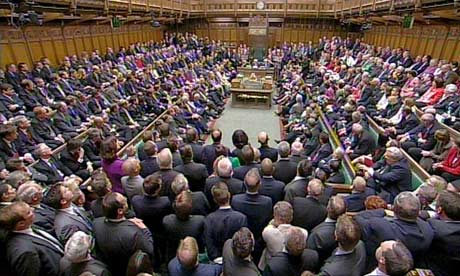
A current petition on the No10 website has highlighted a flaw in the rules that allows MPs and Lords to vote and debate on legislation that may gain revenue for a company that either they own, which employs them or donates to their office.
If you are a local councillor such interests would debar you from a vote and debate at the discretion of the chamber. Now that the petition has reached over 10,000, the government has been forced to respond, so how do they justify such a difference?
The petition made several demands.
i. No member of Parliament may speak or vote in a debate on legislation which could financially benefit any commercial operation in which they have a financial interest;
and
ii. No member of Parliament may speak or vote in a debate on legislation which could financially benefit any commercial operation which has made - or currently makes - donations to themselves personally or their political party.
In response the government stated that it would “not be practical” to prevent Members speaking or voting on legislation which could “financially benefit any commercial operation in which they have a financial interest” or which has made “donations to themselves of (or) their party”. The reason? Because a “significant number of legislative provisions in any year may have beneficial financial implications for all or most commercial operations.”
In terms of donations to the party, as a whole, then this is probably correct. For example, if a person connected to a private health company gave money to a political party, it may make a member of the public mistrust the party, especially if they then go on to win contracts but it is unreasonable to think that this would be enough to debar the entire party from voting on any legislation on legislation that may have an affect on private health and would bring Parliament to a halt.
However, the government claims that it would “not be practical” to prevent a MP from voting with a financial interest is absurd and arrogant. The government says there are many “questions” as to how such a “complex requirement” could be “policed effectively”?
Well, they need look no further than the rules that apply to councillors at a local level. Any prejudicial interest held by a councillor would debar them from a vote and indeed a debate depending on the acceptance of the Chamber.
This current situation suggests that MPs and Lords are somehow more able to separate their public duty from their outside interest, which is patently absurd. Given the level of commercial interests that exist in parliament, the need to change the rules to match those at local level is obvious.
Take Baroness Cumberlege, the Conservative Peer and former Health Secretary. She owns a company that she moved into a position to gain revenue from the new Commissioning Groups, a key component of the Health bill on which she voted. The legislation goes through thanks in part to her vote and she ends up winning small contracts for providing courses to some of the new Commissioning Groups. It’s okay though, because she put her business interest in the Register.
Over 200 parliamentarians had recent or present financial interests to companies or individuals involved in healthcare at the time of the Health and Social Care bill. They were all able to vote, despite these interests. Further research has confirmed that some of these companies attached to Lords either by employment or donations, have gone on to gain contracts in the new NHS.
The fact of the matter is that in their current form, the rules allow any MP or Lord to vote on legislation that may open revenue opportunities for the companies that employ them or donate to them. The rules are different for local councillors who manage to police such matters adequately.
Until MPs and Lords are debarred from a vote when they have a prejudicial interest, then every time they place their vote it will be difficult to know whether their action was in the interest of the public or the corporation that employs them.
The government will always resist further scrutiny, just as they did when a proposal was made for a Register of Interests back in 1974. I leave you with this:
“Should the public know of our outside interests? My answer strictly speaking, is ‘No’. Why should they? There is no opportunity for corruption and precious little opportunity for influence…We are not crooks and we want it to be seen that we are not crooks. We are in the public eye and we hold jobs, which in the eyes of the public are very important. Conservative MP for Lowestoft, James Prior 22nd May, 1974 http://hansard.millbanksystems.com/commons/1974/may/22/members-interests
The full petition can be seen here where you can also sign.
Showing posts with label 'Cumberlege'. Show all posts
Sunday, 15 December 2013
Tuesday, 4 December 2012
The case of Baroness Cumberlege: Why the Lords Rules Need Changing
‘Disappointingly since joining the alliance Cumberlege Connections has not earned any income through the alliance.’ Baroness Cumberlege 26th November 2012
Rules that fail to prevent our Peers from voting when they have a financial interest are not fit for purpose. There were many such culprits who helped pass the Health and Social bill into Act, however, there was one Baroness in particular, who exploited this deficiency in democracy more than most.
On 26 June 2012, I made a complaint against Baroness Cumberlege, to the House of Lords Commissioner for Standards, Sir Paul Kernaghan. Research had revealed that while debating, voting and making amendments on the Health and Social Care bill, the former Conservative Secretary of State for Health, moved her company into an alliance led by PricewaterhouseCoopers that were tendering for and winning contracts for commissioning the new Clinical Commissioning Groups (CCGs).
The rules are such that my complaint had to follow the narrow remit of the non-declaration of her interests in the alliance during the debate, an alleged breach under paragraph 10(b) of the Code of Conduct.
Baroness Cumberlege is the sole owner, chairman and managing director of a company called Cumberlege Connections. The company runs training programmes across the NHS spectrum for consultants, GPs, NHS managers, Directors and chief executives. In addition to this service, part of their training programme covers 'Politics, Power and Persuasion', a tailored two-day programme which includes topics such as: 'Managing the markets, the challenges of commissioning', 'who's who', and 'brokering deals with other independent sector providers'.
Mr Kernaghan wrote in the privileges Committee Second Report:
'I am clear that Baroness Cumberlege has properly registered her interest in Cumberlege Communications in the Register of Lords' Interests. Anyone reading the Register would see that she has an interest in Cumberlege Connections.’
However:
‘She has not registered the involvement of that company with a wider "alliance" led by PwC and I see no reason why she should do so.’
In addition, his investigation did reveal that on occasions he could ’find no evidence that she declared her (company’s) interest during the report or third reading debates on the Bill’, though she participated in them…However, these omissions were not the subject of the complaint so ‘I am not required to make a ruling on them.’
In other words, Baroness Cumberlege or any other Peer for that matter can work for or own a company that can move itself into a position that can make money from a bill they are able to vote on. They do not have to declare any alliance or group that that company has joined, just that their company itself is registered and declared during debates.
Baroness Cumberlege, responded to Mr Kernaghan with this:
‘In my case the complainant Mr. Andrew Robertson (of whom I have no knowledge), alleges that I should have declared an interest in joining an alliance for work commissioned by the NHS. The alliance in question is formed by a number of companies PriceWaterhouseCoopers, the Kings Fund, Common Purpose, Practive, Wragge and Co and my company Cumberlege Connections. Mr. Robertson does not complain about four of the five companies involved, only PriceWaterhouseCoopers. Disappointingly since joining the alliance Cumberlege Connections has not earned any income through the alliance.’
They do not care, or at least the Baroness is less concerned at her manipulation of the democratic system for a potential personal gain than the fact that she failed to make money from it.
If we are to prevent the blatant abuse of position that takes place in the House of Lords, then we must prevent behaviour like that of Baroness Cumberlege in the future. They themselves will not change their behaviour and so we must change it for them. The Lords are an Open House for corporations to sit in the chamber and vote on bills that they will benefit from. Indeed, over 140 Peershave recent or present financial connections to companies that are involved in private healthcare. They were all able to vote on the Heath an Social Care bill.
A petition has been set up to stop Lords from voting when they have a financial interest to a company that will potentially benefit from the bill.
Sign the petition here.
Further reading:
Read Baroness Cumberlege’s full report here.
Background article on Baroness Cumberlege here.
Spinwatch – previous complaint on Baroness Cumberlege here.
Subscribe to:
Posts (Atom)